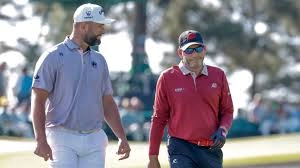
MELTDOWN! Sergio Garcia DESTROYS Driver in Masters TANTRUM - Receives WARNING!
The passion and frustration that characterize professional golf at the highest level were on vivid display at Augusta National, where Sergio Garcia's emotional outburst resulted in a broken driver and a code of conduct warning during the final round of the Masters. The incident, which occurred on the second tee box, provided a dramatic moment that captured the intensity of competition at golf's most prestigious venue.
Garcia's frustration was evident from the opening hole, where he made a bogey that set a negative tone for his round. The 2017 Masters champion's struggles continued on the second tee, where his tee shot found a bunker after what appeared to be an uncomfortable swing. The combination of poor execution and mounting frustration led to an emotional release that resulted in damage to his equipment.
The sequence of events that followed demonstrated both Garcia's emotional nature and the rules of golf that govern such situations. After hitting his shot into the bunker, Garcia struck his club on the grass twice, apparently damaging the club's structure. He then walked to the back of the tee box and hit his driver against a cooler, breaking the head from the shaft in the process.
The rules of golf are specific about equipment damage and replacement. Because Garcia's driver was damaged due to abuse rather than normal course of play, he was not permitted to replace the club during the round. This restriction meant that Garcia would have to complete his round without one of his most important clubs, adding competitive disadvantage to the emotional consequences of his outburst.
The code of conduct warning issued to Garcia by Geoff Yang, president of the competitions committee, represented the first such warning in Masters history. The unprecedented nature of the warning underscores both the severity of Garcia's actions and the tournament's commitment to maintaining standards of behavior appropriate to Augusta National's traditions.
Garcia's post-round comments reflected his awareness of his emotional struggles throughout the season. His acknowledgment of being frustrated "all year" suggests that the Masters incident was not an isolated event but rather part of a broader pattern of emotional challenges that have affected his play. The honesty of his assessment, while not excusing the behavior, provides context for understanding the pressures that professional golfers face.
The contrast between Garcia's outburst and the lighter moment that followed, when he carried the clubs of fellow Spaniard Jon Rahm for a moment, demonstrated the complex emotional landscape that professional athletes navigate. The ability to shift from frustration to camaraderie reflects the human dimensions of competition that often get overlooked in discussions of performance and results.
The broader context of Garcia's career adds perspective to this incident. As a major champion and one of golf's most accomplished players, Garcia has experienced both the highest highs and the most frustrating lows that the sport offers. The emotional investment that has contributed to his success can also manifest in negative ways when results don't meet expectations.
The reaction from fans and media to Garcia's outburst has been mixed, with some criticizing the behavior as unprofessional while others express sympathy for the emotional challenges of competitive golf. The incident has sparked discussions about the mental health aspects of professional sports and the pressures that athletes face when their performance falls short of expectations.
As Garcia processes this incident and its aftermath, the question of how he will manage his emotional responses in future competitions remains relevant. The ability to channel passion productively while avoiding destructive outbursts represents one of the ongoing challenges that professional athletes must navigate throughout their careers.